10.26.2012

Book Beginnings - The Feast of the Goat


Book Beginnings is a meme hosted by Rose City Reader. Share the first sentence (or so) of a book you are currently reading, along with your initial thoughts and impressions about the sentence or book. Remember to include the title of the book and the author AND link up at the Rose City Reader

 
Urania. Her parents had done her no favor; her name suggested a planet, a mineral, anything but the slender, fine-featured woman with burnished skin and large, dark, rather sad eyes who looked back at her from the woman. Urania! What an idea for a name.
I don't like this beginning all that much. I don't think the name Urania is all that great, but I also don't think it's the worst name in the world either. In a book about the end of a dictator's regime, I'm wondering if her name is the greatest of her worries. Probably not.
 
Originally, I was supposed to read The War of the End of the World by Vargas Llosa for another reading challenge. However, timing and the pure size of the book wasn't realistic, so I opted for another Vargas Llosa to replace it: The Feast of the Goat. A couple years ago, in college, I almost read it for one of my poli-sci. classes but ended up reading One Hundred Years of Solitude.
 
Anyways, I'm reading it now--about a third of the way through. It's interesting. I can't decide if knowing the factual history of the Trujillo dictatorship in the DR is helping or hindering my reading experience...also, Urania's (the woman speaking in the opener) narrative is whiny.  There are two other narratives to make up for hers.  

10.23.2012

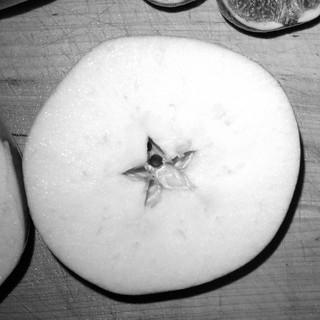
Poetry for thought - White Apples


White Apples 
by Donald Hall

when my father had been dead a week
I woke
with his voice in my ear
I sat up in bed
and held my breath
and stared at the pale closed door

white apples and the taste of stone

if he called again
I would put on my coat and galoshes

Image:Flickr-hapticflapjack

10.21.2012

Life of Pi - Movie Trailer


I can't wait to see this adaptation. I kind of forgot it was coming out this year until I saw the trailer  on television about five minutes ago. I really enjoyed reading Life of Pi and based solely off this two minutes, I think it's safe to say the movie will at least look beautiful, if it doesn't translate well onto screen. We'll see what Ang Lee has to offer--he's had his hands in an interesting combination of movies. 

10.19.2012

Review - Pale Fire


Pale Fire
by Vladimir Nabokov
300+ pages

Description via Goodreads
Down you go, but all the while you feel suspended and buoyed as you somersault in slow motion like a somnolent tumbler pigeon, and sprawl supine on the elderdown of the air, or lazily turn to embrace your pillow, enjoying every last instant of soft, deep, death-padded life, with the earth's green seesaw now above, now below, and the voluptuous crucifixion, as you stretch yourself in the growing rush, in the nearing swish, and then your loved body's obliteration in the Lap of the Lord (221)

Where to start with this book....there are two narratives; one of John Shade, the poet, who led a relatively uninteresting life, with the exception of a recurring preoccupation with death. His narrative is confined to four cantos of poetry. The other is Charles Kinbote, neighbor of Shade and self-proclaimed editor of Shade's work. His narrative starts with the foreword, continues with the commentary and ends with the index. The reader will quickly learn that Kinbote is not exactly what he seems. I find him to be sort of a Shade groupie, a megalomaniac and his sense of entitlement and self-importance is quite annoying. But I think this is intentional...I expected the commentary to be an explication, a means to delve deeper into Shade's intent, but instead we are given huge chunks of the story of Kinbote. As I read about the escape of a self-exiled King Charles of the imaginary Zembla, I'm only thinking about how peculiar it is for the commentary to not be exclusively about Shade or his work. Especially, since I think Shade's upbringing and encounters with death have more gravity than Kinbote's predicament. Why does this happen? 
I can't tell you how/ I knew--but I did know that I had crossed/ The border. Everything I loved was lost/ But no aorta could report regret./ And blood-black nothingness began to spin/ A system of cells interlinked/ Within one stem. And dreadfully distinct/ Against the dark, a tall white fountain played (59)
I think this is one of those books that could be read more than once and each time something different  pulled from it. I feel the need to say that I didn't read Pale Fire in order, I skipped around. I read the poem first, and then the foreword and then the commentary/index. I'm not exactly sure why I did this, but I felt like I needed to read Shade's work without Kinbote's influence...There is something to be said when a poet has already reduced his life to 999 lines of poetry and the editor takes it upon himself to insert entire complex/and or absurd memories into a work that isn't about him. He reached beyond the space of the foreword--I think there's criticism about literary criticism here...at least that's what I took from it because Kinbote is pretty much ridiculous. 

Very interesting meta fiction (?) Definitely something I would consider rereading and probably need to reread.

Pale Fire

Three stars.